
Ammonium Sulfate Fertilizer Uses: Benefits, Crops, and Application Guide
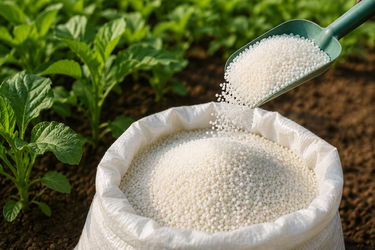
Ammonium sulfate fertilizer is primarily used to supply both nitrogen and sulfur for crop production. It is commonly applied to support plant growth, improve sulfur nutrition, and fit fertilization programs for cereals, vegetables, oilseed crops, and other agricultural systems.
Among the most common ammonium sulfate fertilizer uses are correcting sulfur deficiency, supporting vegetative growth, and contributing to balanced nutrient management under suitable soil conditions.
What Is Ammonium Sulfate Fertilizer?
Ammonium sulfate is a nitrogen and sulfur fertilizer commonly used in agricultural production. It provides crops with ammonium nitrogen, which is one of the major plant-available nitrogen forms, together with sulfate sulfur, which plants can absorb directly.
Typical agricultural-grade ammonium sulfate contains approximately 21% nitrogen and 24% sulfur, although exact specifications may vary by manufacturer and product grade.
Unlike fertilizers that primarily supply nitrogen alone, ammonium sulfate offers two essential nutrients simultaneously. This combination makes the use of ammonium sulfate fertilizer suitable for farms where both nitrogen and sulfur supplementation are required.
It is widely used in crop production and fertilizer blending and is available in crystalline or granular grades.
Rather than being viewed simply as another nitrogen fertilizer, ammonium sulfate is often selected because it contributes to more balanced crop nutrition in situations where sulfur availability may limit plant growth.
Main Uses of Ammonium Sulfate Fertilizer in Agriculture
Supplying Nitrogen for Crop Growth
One of the primary ammonium sulfate fertilizer uses is providing nitrogen for crop development. Nitrogen is essential for leaf formation, stem growth, chlorophyll production, and overall biomass accumulation. Crops generally require adequate nitrogen throughout the growing season to support healthy vegetative growth and yield formation.
The ammonium form of nitrogen supplied by ammonium sulfate becomes available to plants through natural soil processes.
Although ammonium sulfate contains less total nitrogen than urea, comparing fertilizers solely by nitrogen percentage does not always provide a complete picture. In fields where sulfur is also needed, supplying both nutrients together may simplify fertilizer programs while reducing the need for separate sulfur applications.
For this reason, ammonium sulfate application is frequently considered as part of integrated nutrient management rather than simply as a nitrogen source.
Providing Sulfur for Crop Nutrition
Another important ammonium sulfate benefit is its ability to supply sulfate sulfur.
Sulfur is recognized as one of the essential plant nutrients. It contributes to amino acid formation, protein synthesis, enzyme activity, and chlorophyll development. Some crops also have relatively high sulfur requirements throughout their growth cycle.
Unlike elemental sulfur, sulfate sulfur is immediately available for plant uptake. This allows crops experiencing sulfur deficiency to access the nutrient without waiting for biological oxidation in the soil.
This dual nutrient supply is one of the key differences between ammonium sulfate and fertilizers such as urea. While both products can contribute nitrogen, only ammonium sulfate provides readily available sulfur at the same time.
Because of this characteristic, many fertilizer programs include ammonium sulfate where sulfur nutrition is considered important for maintaining balanced crop growth.
Supporting Fertilizer Programs in Sulfur-Deficient Soils
The ammonium sulphate use in agriculture becomes particularly valuable in soils where sulfur availability is limited.
Sulfur deficiency may occur more frequently in sandy soils, soils with low organic matter, highly weathered soils, or areas experiencing significant nutrient leaching. Modern agricultural systems with higher crop yields may also remove greater amounts of sulfur from the field over time.
Under these conditions, ammonium sulfate can serve as one option for supplying both nitrogen and sulfur simultaneously.
However, fertilizer selection should always be based on soil analysis whenever possible. Soil testing provides valuable information about nutrient availability and helps growers determine whether sulfur supplementation is necessary. Local agricultural recommendations and crop-specific nutrient requirements should also be considered before making fertilizer decisions.
Using soil data instead of assumptions helps improve fertilizer efficiency while reducing unnecessary nutrient application.
Helping Manage High-pH Soil Conditions
Another recognized use of ammonium sulfate fertilizer involves certain alkaline or high-pH soils.
As ammonium nitrogen undergoes nitrification, hydrogen ions are released into the soil, producing a gradual acidifying effect. This property may help improve nutrient availability in some alkaline soils where phosphorus and micronutrients become less accessible to plants.
In these situations, ammonium sulfate application may support broader soil fertility management strategies.
However, this characteristic should not be interpreted as a universal solution for soil pH problems. Continuous application over many growing seasons may gradually lower soil pH beyond desirable levels, especially in naturally acidic soils.
For this reason, periodic soil testing remains important. Monitoring pH allows growers to adjust fertilization practices when necessary and maintain suitable growing conditions for their crops.
Which Crops Can Benefit from Ammonium Sulfate?
The suitability of ammonium sulfate depends largely on crop nutrient demand and field conditions.
| Crop Type | Why Ammonium Sulfate May Be Used |
|---|---|
| Cereals | Nitrogen supply + sulfur nutrition |
| Oilseed crops | Higher sulfur demand |
| Brassicas | Sulfur-sensitive crops |
| Vegetables | Balanced N + S nutrition |
| Fruit trees | Supplemental sulfur where needed |
Cereal Crops
Cereal crops such as corn, wheat, rice, and barley require substantial nitrogen throughout their growing season to support vigorous vegetative growth and grain production.
In regions where sulfur availability may be limited, combining nitrogen with sulfate sulfur can contribute to a more balanced nutrient supply. As a result, ammonium sulfate fertilizer uses are commonly found in cereal production programs alongside other nitrogen fertilizers.
Actual fertilizer rates should be determined according to expected yield, soil fertility status, and local extension recommendations.
Oilseed Crops and Brassicas
Oilseed crops and Brassica vegetables—including canola, rapeseed, mustard, cabbage, broccoli, and related species—are generally considered more sensitive to sulfur deficiency than many other crops.
These crops often require relatively higher sulfur availability because sulfur participates in protein formation and the production of sulfur-containing plant compounds.
For growers managing these crops, the use of ammonium sulfate fertilizermay provide an effective source of both nitrogen and sulfate sulfur as part of a balanced fertility program.
Nevertheless, sulfur demand varies with climate, soil type, crop variety, and expected production level. Soil testing remains the most reliable basis for fertilizer planning.
Vegetables and Horticultural Crops
Many vegetables and horticultural crops also benefit from carefully managed nitrogen and sulfur nutrition.
Crops such as onions, garlic, leafy vegetables, tomatoes, peppers, and other fruiting vegetables require balanced nutrient management throughout different growth stages. While nutrient requirements differ among species, supplying appropriate levels of nitrogen and sulfur can support healthy plant development and overall crop quality.
Because excessive nitrogen may reduce fertilizer efficiency or create nutritional imbalance, growers should apply ammonium sulfate according to crop demand rather than using a uniform rate across all fields.
Proper fertilizer management, irrigation scheduling, and regular monitoring of soil fertility together contribute to more effective crop nutrition.
How to Use Ammonium Sulfate Fertilizer Effectively
Proper ammonium sulfate application should always be based on soil test results, crop nutrient requirements, and local agronomic recommendations.
To improve fertilizer efficiency, growers should:
- Conduct a soil test before application.
- Apply as a basal fertilizer, top dressing, or in blended fertilizer formulations.
- Match application rates to crop demand.
- Avoid excessive application and monitor soil pH regularly.
- Confirm compatibility before mixing with other fertilizers or fertigation systems.
- Store the fertilizer in a dry place to prevent moisture absorption and caking.
Following these practices helps improve nutrient management while maintaining fertilizer quality during storage and application.
What Should Buyers Check Before Purchasing Ammonium Sulfate?
For agricultural distributors, fertilizer manufacturers, and commercial growers, selecting the right supplier involves more than comparing prices. Product quality, consistency, and logistics all influence purchasing decisions.
Before placing an order, buyers should check:
- Nitrogen and sulfur content
- Moisture level
- Particle size
- Solubility
- Caking condition
- Packaging options
- Shelf life
- COA or specification sheet
- Bulk supply capability
- Export and delivery support
Choosing a supplier that provides complete technical documentation and reliable after-sales support can help reduce procurement risks and improve supply chain efficiency.
Knlan Ammonium Sulfate for Agricultural Buyers
KNLAN supplies ammonium sulfate products for agricultural distributors, fertilizer manufacturers, wholesalers, and commercial growers in international markets.
The company's ammonium sulfate is designed for agricultural applications where both nitrogen and sulfur nutrition are required. It can be incorporated into fertilizer formulations or used in crop nutrition programs according to local agronomic recommendations.
In addition to product supply, KNLAN supports customers with specification information, packaging options, bulk purchasing solutions, and export logistics. This flexibility helps buyers source fertilizer products that align with different market requirements and procurement volumes.
For customers evaluating suppliers, discussing product specifications, packaging requirements, minimum order quantities, and shipping arrangements before purchase can help ensure the selected product meets both agronomic and commercial expectations.
Conclusion
The primary ammonium sulfate fertilizer uses are supplying nitrogen and sulfur to support balanced crop nutrition. Because it provides two essential nutrients in one fertilizer, it is commonly used in sulfur-deficient soils, for crops with relatively higher sulfur requirements, and in some alkaline soil management programs.
However, no single nitrogen fertilizer is suitable for every farming situation. The use of ammonium sulfate fertilizer should always be based on soil test results, crop nutrient demand, application methods, and long-term soil management goals rather than relying on general recommendations alone.
Ammonium sulfate fertilizer mainly supplies nitrogen and sulfur for balanced crop nutrition. The best fertilizer choice depends on soil tests, crop needs, and application plans. KNLAN provides agricultural-grade ammonium sulfate with flexible packaging and global supply support.

Blending chemical innovation with sustainable practices to produce premium nitrates that power crops and industries across continents.
Be the first to know about new collections and exclusive offers.
@2025 Shanxi Knlan Chemical Co., Ltd