
Calcium Nitrate Compatibility: What Fertilizers Should Not Be Mixed?
Calcium nitrate is widely used in fertigation, greenhouse cultivation, and hydroponic nutrient programs because it supplies both calcium and nitrate nitrogen. However, mixing it with certain fertilizers can cause precipitation, reduce nutrient availability, and clog irrigation equipment.
Understanding calcium nitrate compatibility is especially important when preparing concentrated fertilizer stock solutions. Two fertilizers that dissolve separately in water may not remain compatible when combined.
This guide explains which fertilizers should be kept separate from calcium nitrate, how to organize stock tanks, and what to verify before mixing products in a commercial fertigation system.
Calcium Nitrate Compatibility Chart
The following calcium nitrate compatibility chart provides practical guidance for common fertilizer combinations. It focuses primarily on concentrated stock solutions used in fertigation, rather than declaring whether every combination can coexist under all application conditions.
| Fertilizer | Compatibility with Calcium Nitrate | Recommended Action |
|---|---|---|
| Monoammonium phosphate (MAP) | High precipitation risk in concentrated mixtures | Keep in a separate stock tank |
| Diammonium phosphate (DAP) | High precipitation risk in concentrated mixtures | Keep separate; verify the formulation before use |
| Monopotassium phosphate (MKP) | High precipitation risk in concentrated mixtures | Separate from calcium nitrate stock |
| Magnesium sulfate | Calcium sulfate precipitation may occur | Keep concentrated solutions separate |
| Potassium sulfate | Calcium sulfate precipitation may occur | Avoid concentrated co-mixing; verify final solution conditions |
| Ammonium sulfate | Calcium sulfate precipitation may occur | Use a separate stock tank |
| Potassium nitrate | Generally compatible in suitable fertilizer formulations | Verify solubility, concentration, and product specifications |
| Urea | Generally compatible under suitable conditions | Check the complete formulation and application method |
Important: This chart is a screening guide, not a guarantee of compatibility. Actual results depend on the fertilizer formulation, concentration, water chemistry, temperature, and pH. Follow the product manufacturer's instructions before preparing a stock solution.
Fertilizers That Should Generally Be Kept Separate
Phosphate fertilizers: MAP, DAP, and MKP supply phosphorus in phosphate forms that may react with calcium to form poorly soluble calcium phosphate compounds. The risk is particularly important when concentrated solutions are mixed directly.
Sulfate fertilizers: Magnesium sulfate, potassium sulfate, and ammonium sulfate supply sulfate ions. When calcium and sulfate concentrations are sufficiently high, calcium sulfate (gypsum) may precipitate.
These combinations deserve particular attention in commercial fertigation because precipitates can accumulate in filters, pipes, and drip emitters.
Fertilizers That May Be Compatible
Potassium nitrate and urea are often used in calcium-containing nutrient programs, but compatibility should not be assumed for every commercial product or concentration.
For example, potassium nitrate supplies nitrate nitrogen and potassium without adding phosphate or sulfate. It can be a useful component of a fertigation program, subject to formulation-specific solubility and mixing requirements.
For product selection, compare the specifications of calcium nitrate tetrahydrate and potassium nitrate rather than relying on the product names alone.
Why Does Calcium Nitrate Form Precipitates with Certain Fertilizers?
The main compatibility concerns involve phosphate and sulfate ions.
Calcium Nitrate and Phosphate Fertilizers
When calcium ions react with phosphate species under suitable chemical conditions, poorly soluble calcium phosphate compounds can form. These reactions depend on concentration, pH, and the composition of the solution.
This is why MAP, DAP, and MKP should not be combined with calcium nitrate in concentrated stock solutions unless the specific formulation has been validated for that use.
Calcium Nitrate and Sulfate Fertilizers
Calcium can also react with sulfate to form calcium sulfate. Even when calcium nitrate and a sulfate fertilizer dissolve separately, their combined solution may exceed the conditions under which all components remain dissolved.
The practical lesson is straightforward: individual water solubility does not establish compatibility after mixing.
The risk is not limited to the stock tank. Irrigation water may already contain calcium, magnesium, sulfate, or bicarbonate, which can affect the stability of the final nutrient solution.
For more information on managing these risks, see KNLAN Chemical's guide to preventing fertilizer precipitation in fertigation systems.
How to Use Calcium Nitrate Safely in Fertigation
The correct mixing arrangement depends on the fertilizer program, injector configuration, and water quality. For many commercial systems, separating incompatible fertilizers in concentrated stock solutions is the most practical starting point.
1. Separate Calcium Nitrate from Phosphate and Sulfate Stock Solutions
A common approach is to use separate stock tanks:
Tank A: Calcium nitrate and only those additional fertilizers confirmed to be compatible with it.
Tank B: Phosphate and sulfate fertilizers that need to remain separate from concentrated calcium solutions.
The exact grouping should be based on the full formulation of every product in each tank. Do not assume that every fertilizer without phosphate or sulfate is automatically compatible.
Separate injection allows the fertilizers to enter the irrigation water independently and become diluted before they come into contact. However, dilution alone does not guarantee that the final nutrient solution will remain stable.
Follow the fertigation system manufacturer's instructions for injection sequence, dilution ratio, and flushing requirements.
2. Check Irrigation Water Quality
Before finalizing a fertilizer mixing plan, review the water used to prepare stock solutions and deliver nutrients to the crop.
Important parameters may include:
Calcium and magnesium concentrations
Sulfate and bicarbonate levels
pH and electrical conductivity (EC)
Water temperature and the intended fertilizer concentration
High calcium levels can increase phosphate precipitation risk, while elevated sulfate concentrations can contribute to calcium sulfate formation. Bicarbonate-rich water can also cause mineral precipitation under suitable pH and concentration conditions.
If water analysis is unavailable or the solution repeatedly develops sediment, obtain a water test before changing fertilizer concentrations or acidifying the system.
3. Verify the Actual Fertilizer Combination
Before preparing a large batch, check the product specifications and manufacturer's mixing instructions.
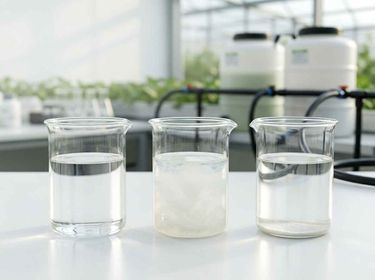
A small-scale compatibility test can help identify visible precipitation when the proposed combination is not already ruled out by the product instructions. Use the intended irrigation water and a representative dilution, mix the products in the planned proportions, and observe the solution for cloudiness, crystals, or sediment.
If precipitation appears, do not introduce the mixture into the irrigation system without further technical assessment.
A clear solution is not proof of long-term compatibility. Some problems develop later or under different temperature, concentration, and operating conditions. A jar test should support—not replace—technical documentation and water-quality assessment.
Frequently Asked Questions
Can Calcium Nitrate and Potassium Nitrate Be Mixed?
They are generally compatible in suitable fertilizer formulations because neither introduces phosphate or sulfate. However, the actual concentration, solubility, product grade, and intended application method should still be checked before preparing a concentrated stock solution.
Can Calcium Nitrate and Magnesium Sulfate Be Used in the Same Fertigation System?
Yes, they may be used in the same overall nutrient program when the system is designed appropriately. However, concentrated calcium nitrate and magnesium sulfate solutions should generally be kept separate because calcium sulfate may precipitate when they are mixed. Final solution conditions also need to be verified.
Can Calcium Nitrate Be Mixed with NPK Fertilizer?
It depends on the NPK formulation. Products containing phosphate or sulfate may be unsuitable for direct mixing with concentrated calcium nitrate. Check the complete ingredient declaration and the manufacturer's compatibility instructions before combining them.
Before You Buy or Mix: A Supplier Verification Checklist
For growers, fertilizer distributors, and commercial buyers, verify the following information before approving a fertilizer combination:
Product formulation: Obtain the complete ingredient declaration, fertilizer grade, and technical data sheet.
Mixing instructions: Confirm whether the product is approved for use in a concentrated stock solution with the other fertilizers in your program.
Water quality requirements: Check the recommended water conditions, concentration limits, and application requirements.
Technical support: Request written compatibility guidance from the supplier for specialty liquid formulations or combinations whose compatibility is uncertain.
These checks are particularly important when purchasing fertilizers in bulk or establishing a standardized mixing process for multiple growing sites.
Need Help Selecting Fertilizers for Your Application?
Choosing a suitable fertilizer involves more than comparing nutrient grades or solubility. Product formulation, irrigation water quality, stock-solution concentration, and application method all affect compatibility.
KNLAN Chemical supplies nitrate-based fertilizers for agricultural and industrial applications, including calcium nitrate tetrahydrate and potassium nitrate.
If you are sourcing fertilizers for commercial fertigation, contact KNLAN Chemical with your required product grade, application method, target concentration, and other fertilizers in your program. This information will help the supplier assess your requirements and identify the product documentation needed before mixing.
Always confirm compatibility for the specific fertilizer products and operating conditions before preparing concentrated stock solutions.

Blending chemical innovation with sustainable practices to produce premium nitrates that power crops and industries across continents.
Be the first to know about new collections and exclusive offers.
@2025 Shanxi Knlan Chemical Co., Ltd